Skip to navigation
Skip to main content



Are Refurbished Phones Worth It? What to Know Before You Buy

On this page
Shop by condition
Every phone fully tested. Never a cracked screen.
For most buyers, yes. A refurbished phone from a seller that tests every device, backs it with a real warranty and gives you time to return it can cost hundreds of dollars less than a new one and do the same everyday job. The value depends on who sells it and what protection comes with it, so this guide covers what refurbished means, what you can save, how long these phones last, and the checks that separate a good buy from a risky one.
Grasshot
Grasshot offers tested refurbished phones from major brands in Excellent or Good condition, each covered by a one-year warranty.
- Refurbished phones are used phones that have been inspected, repaired where needed and cleaned before resale. Savings of a few hundred dollars on a recent model are realistic.
- The warranty, the return window and the battery policy matter more than the brand name on the box.
- Pick the newest model you can afford. Software support, not hardware, usually decides how long a phone stays useful.
- Choosing the better of two conditions costs little extra and is worth it for most buyers.
- Buying refurbished also cuts the footprint of owning a phone compared with buying new.
What “refurbished” actually means
The word has no single legal definition for phones, which is why it pays to read the seller’s own description. In general, a refurbished phone sits between used and new. iFixit explains that refurbished devices may have been returned shortly after a sale or maintained before resale, and that sellers may replace batteries or other components, clean the device and sometimes add a fresh warranty. A plain used phone comes straight from a previous owner, may carry cosmetic wear or a tired battery, and often has no warranty or return policy.
That difference is the whole point. When you buy a used phone from an individual, you are the tester. When you buy refurbished from a store, the testing, repair and cleaning happen before the phone reaches you, and the store stands behind the result.
There are three common routes:
- Manufacturer programs, where the brand itself inspects and resells its devices.
- Retailers and marketplaces that specialize in refurbished phones, which test devices from many brands and grade their condition.
- Individual sellers, which are really used phones with no inspection standard.
We sit in the middle category. Every phone at Grasshot is tested for functionality, graded Excellent or Good, and covered by a one-year warranty.
How much can you save?
Savings vary by model and age, but the research on this is consistent. Consumer Reports found that a 128GB iPhone 15 from a refurbished marketplace was about $500, which was $200 less than new from Apple. Consumer Reports also notes that a refurbished iPhone 13 could be bought directly from Apple for as little as $450.
Manufacturer programs advertise discounts too. 9to5Google reported that Google’s certified refurbished Pixel program offers up to 40% off original retail price.
The pattern is simple. The older the model, the bigger the percentage you save. The newest generation saves less in percentage terms but often more in dollars, because the starting price is higher. A phone one or two generations back is where most buyers find the best balance. Our listings show the saving against the new-device price on every product page, so you can see the gap before you add anything to your cart.
A worked example: say a flagship was $999 new and a refurbished unit one generation older sits at $600 to $700. You keep a fast processor, a good camera and several more years of security updates, and you keep a few hundred dollars. Spend that difference on a case, a screen protector and a fast charger, and you are still ahead.
Are refurbished phones as good as new?
For daily use, a properly refurbished phone behaves like any other phone of its age. It makes calls, runs apps, takes photos and receives the same software updates as a new unit of that model.
The honest nuance is that every phone, new or refurbished, ages. An IEEE study from 2021 by Hazelwood and Pecht makes the point that all electronic systems lose reliability over time, and that the authors see a need for standards for smartphone refurbishment. That is why the process matters. Testing, replacing worn parts and a meaningful warranty are what turn a used phone into a dependable one. A seller that does all three is doing the work the study says should be standard.
Manufacturer programs show what a thorough process looks like. Engadget reports that Apple’s certified refurbished iPhones get a new battery and outer shell, genuine replacement parts and the same one-year limited warranty as a new iPhone, while Samsung’s program uses a 147-point inspection. Engadget’s writer adds that a certified or reputable refurbished phone is typically the safer option if you want to minimize unknowns, and that the premium over a used phone should cover testing, return policies and a warranty.
That is the standard to hold any seller to, including us. We test devices for functionality, grade them Excellent or Good, and add a one-year warranty and free 30-day returns so a problem a month in is our problem, not yours.
Do refurbished phones last as long?
A refurbished phone can easily serve for years. What limits its life is usually not a failed part but two ordinary things: the battery and software support.
Battery. Batteries wear with charge cycles regardless of who owns the phone. Wirecutter notes that you may need to replace the battery sooner than on a new phone, and that for an iPhone 13 the replacement costs $89 at an Apple Store. Check what the seller promises on battery health. Policies differ widely: MakeUseOf reports that some manufacturer programs include a battery replacement, while some marketplaces only require a minimum of 80% capacity, which can mean original cells. Our battery-life guarantees vary by condition, so read the one attached to the grade you choose.
Software support. Wirecutter points out that phones slow down as newer apps demand more processing power, and that Apple tends to support its phones for about six years, so an iPhone 13 gets updates only until around 2027. The lesson is to buy the newest generation your budget allows. A phone that is one year old has far more update runway than one that is four years old.
With a recent model, a fresh-enough battery and a warranty, expect the same practical lifespan you would from buying new and keeping the phone for several years.
Condition grades: Excellent or Good?
Grades describe cosmetics, not function. Both Excellent and Good phones at Grasshot are tested and working. The difference is how many marks you will see on the frame or screen.
Wirecutter compared pricing across several refurbished sellers and found the gap between Good and Excellent is only about $20, and it recommends spending the extra for the better condition. We agree in most cases. If the phone will live in a case, Good is a perfectly sensible choice. If you want it to look close to new, or you plan to resell it later, Excellent pays you back. Our guide to refurbished phone grades walks through what each grade looks like.
What to check before you buy
Use this list on any refurbished phone, from any seller.
- The refurbishment process.Consumer Reports advises asking how the phone was inspected and restored: what was tested, whether the battery was replaced, whether accessories are included and where the parts came from.
- The warranty length. The same Consumer Reports article shows how much this varies: some sellers give a full year while others give only 90 days. A year is the benchmark worth looking for.
- The return window. Consumer Reports recommends a retailer that gives you at least a month to return the phone. Thirty days lets you use the phone through a full billing cycle and a full battery cycle.
- The battery policy. Look for a stated guarantee, not a vague promise.
- The seller type. Consumer Reports also advises caution with individual sellers, where there is no process and no protection behind the sale.
- Carrier and storage. Confirm the phone works on your network and has enough storage. Our listings are organized by manufacturer, model, storage, carrier and condition, so you can filter to what fits.
- Shipping cost. Free delivery keeps the advertised saving real.
On day one, whatever the seller, do a quick check: make a call, test the cameras and speakers, charge it, connect to Wi-Fi and cellular, and look over the screen. Doing this inside the return window means anything unexpected is easy to resolve.
Refurbished vs new: how to decide
| What matters to you | Refurbished from a tested, warranty-backed seller | New |
|---|---|---|
| Upfront cost | Often hundreds of dollars less on recent models | Full retail price |
| Latest model | Usually one or two generations back, with some current models available | Always available |
| Warranty | One year with us | Typically one year |
| Battery | Depends on the seller’s policy | Fresh |
| Environmental footprint | Much lower | Higher |
| Return window | 30 days with us | Varies by retailer |
Refurbished makes the most sense when you want a capable phone and the latest release is not a priority. Consumer Reports quotes video producer Jamison Hermann, who has bought several refurbished phones for his family and found only a few superficial scratches. He plans to keep doing it because it is significantly cheaper if you are fine with a phone a year or two older. Wirecutter’s Dave Gershgorn makes a similar case: for people who need a usable iPhone rather than the latest, the trade-offs are often worth making.
Buying new is simpler if you want a model on its release day, or you want every spec of the newest generation. If your priority is value, a refurbished flagship from the previous cycle usually beats a new mid-range phone on camera, screen and speed.
The environmental case
A large share of a phone’s carbon footprint comes from making it, so keeping existing phones in use matters. Environment America’s factsheet says buying refurbished cuts the environmental impact of a device by 77% to 91%, listing 56 kg of CO2 for a new smartphone against 11 kg for a refurbished one.
A 2026 study in Communications Earth & Environment found that in the United States each second-hand smartphone transaction extends use time by 40% and displaces 0.40 new devices. Circular users had a 41% lower carbon footprint than linear consumers, at 7.9 versus 13.5 kg CO2e per year.
One research point is worth keeping in mind. An earlier study of US smartphone reuse found that about a third of the emissions savings can be offset if people spend the money they saved on other things. The takeaway is to enjoy the savings, and put some of them toward a case or a long-term plan to keep the phone for years, which is where the real benefit comes from.
Which phone should you look at?
Start from how you use your phone, then pick the brand.
- iPhone. A good fit if you want long software support and a consistent experience. Browse our refurbished iPhones, such as the iPhone 16e or the iPhone 13 mini if you prefer a compact size.
- Samsung Galaxy. Strong screens and a wide price range, from the Galaxy A15 up to the Galaxy S25 Ultra. See all Samsung phones.
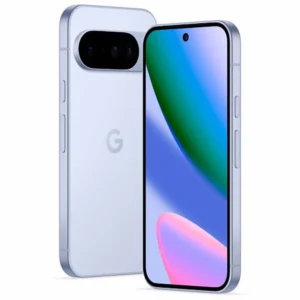
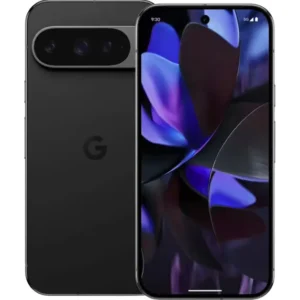
- Google Pixel. Known for cameras and clean software. The Pixel 9a and Pixel 9 are good places to start in our Google Pixel range.
- Motorola. Practical, budget-friendly phones with large batteries, in our Motorola section.
If you are weighing a trade-in against a refurbished purchase, our comparison of trade-in versus buying refurbished shows how the numbers work out. For a broader overview, see our US buyer’s guide to refurbished smartphones.
Ready to shop refurbished with confidence
Every phone we sell is tested for functionality, graded Excellent or Good, and covered by a one-year warranty. You also get free standard delivery, free 30-day returns and battery-life guarantees that vary by condition, so you can compare models, storage and carrier compatibility with the protection already built in.
Browse the full Grasshot store to compare models by condition and see the saving against the new price on each listing.
Our perspective
We built Grasshot on a simple idea: a good smartphone should not require a new-phone price. Most people do not need the newest release. They need a phone that works, keeps working, and does not come with a gamble attached.
That is why we put so much weight on the things around the phone. Every device is tested for functionality and sold as Excellent or Good, so you know what you are getting. A one-year warranty and free 30-day returns mean that if something is not right, you have time and a clear way to fix it. Battery-life guarantees that vary by condition tell you what to expect before you pay.
We also believe in the bigger picture. Each phone that gets a second life is one fewer that ends up as electronic waste, and one fewer that has to be manufactured. Making smartphones more accessible and extending their lifecycles are the same goal for us.
If you are on the fence, choose the newest generation that fits your budget, choose the condition grade you are comfortable with, and read the protection that comes with the phone. That is how we would shop for our own family.
the author
FAQ
Are refurbished phones good?
Yes, when they come from a seller that tests them and stands behind them. Look for a clear description of the inspection, a one-year warranty and a return window of at least a month. Our phones are tested for functionality and covered by a one-year warranty.
Should I buy a refurbished phone or a new one?
Buy refurbished if you want to save money and are happy with a model that is one or two generations old. Buy new if you want the latest release on day one. For many buyers, a refurbished flagship offers better hardware than a new budget phone at a similar price.
Is a refurbished phone the same as a used phone?
Not quite. A used phone is simply resold by its previous owner, often with no checks. A refurbished phone has been inspected, repaired where needed and cleaned by the seller, and usually comes with a warranty. Read more in our guide to why people choose refurbished.
Do refurbished phones last as long as new ones?
A recent refurbished model with a healthy battery can serve for years. Battery wear and the end of software updates are what limit any phone’s life, so choose a newer model and a seller with a battery guarantee.
How do I choose a refurbished iPhone?
Pick the newest generation you can afford, choose Excellent if cosmetics matter to you, check the warranty and return terms, and confirm carrier and storage. Start with our refurbished iPhone collection.
Sources
- iFixit: What’s the Difference Between New, Used, and Refurbished?
- Consumer Reports: Should You Buy a Refurbished Phone?
- Consumer Reports: Great Low-Priced Smartphones
- 9to5Google: Certified Refurbished Pixel phones
- IEEE: Life Extension of Electronic Products, a case study
- Engadget: Refurbished vs. Pre-Owned Phones
- Wirecutter: We Bought a Bunch of Used iPhones
- MakeUseOf: “Refurbished” means wildly different things
- Environment America: Refurbished Technology Factsheet
- Communications Earth & Environment: Second-hand smartphones reduce carbon emissions
- Frontiers in Energy Research: Does the Circular Economy Grow the Pie?
Recommended
Shop with Grasshot
“Looking for a better way to buy your next phone? Explore Grasshot’s selection of refurbished and pre-owned Smartphones including iPhones, Samsung Galaxy devices, Google Pixel, Motorola and many more smartphone devices built for performance without the premium price.”
Related Reading
Shop by condition
Every phone fully tested. Never a cracked screen.
Latest articles


A brand you can trust
Not happy with your purchase? Get in touch and we’ll do our best to make it right. It’s one more way we earn your trust.
Find your next phone
Refurbished and pre-owned phones from the brands you already know.